Colleges Nationwide Are Bracing Themselves Amidst Uncertainty
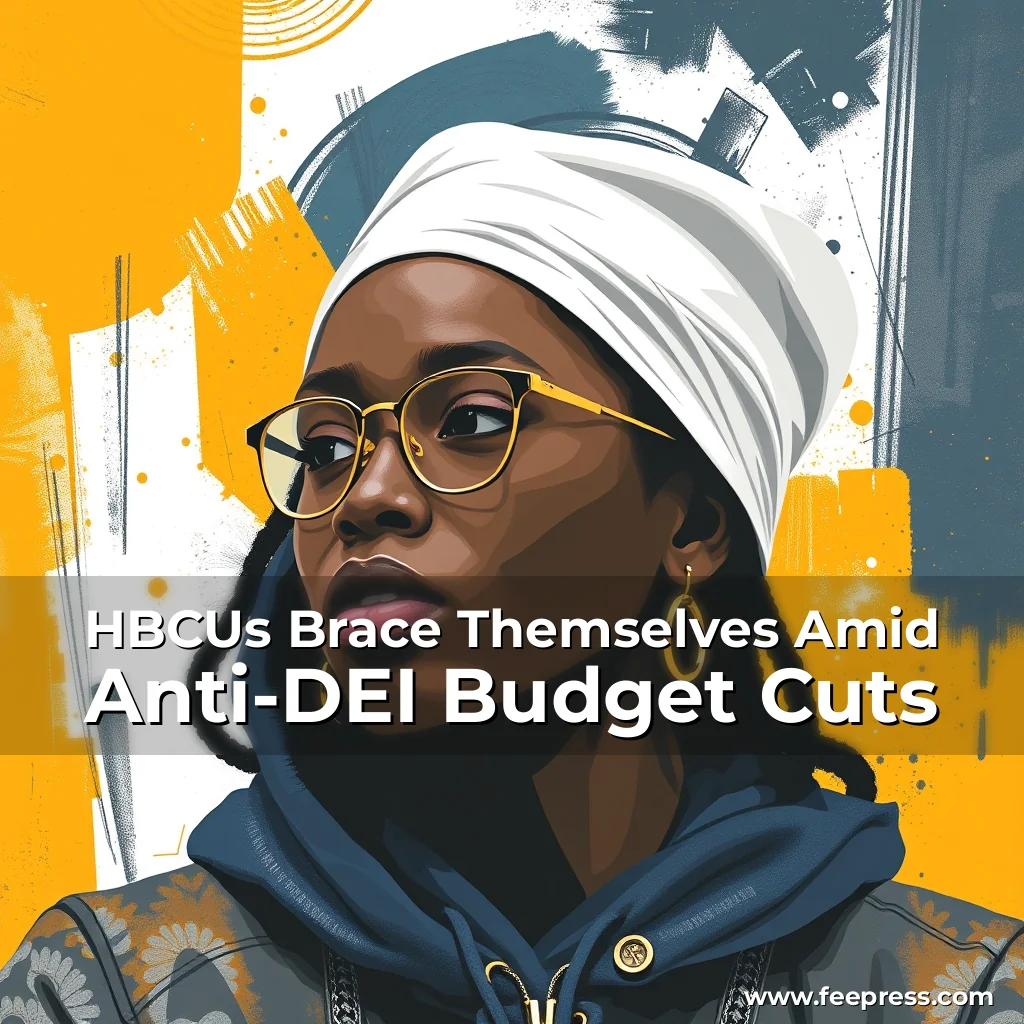
Colleges nationwide are bracing themselves as the Trump administration proposes drastic cuts in federal education funding. The potential loss of funding may have a significant impact on historically Black colleges and universities, which have been struggling with underfunding for decades. Educational leaders are warning of a potential catastrophe, and institutions are preparing for the worst-case scenario. A Lack of Trust in Federal Funding
The decision to cut federal education funding has raised concerns among educational leaders. Historically, Black colleges have relied heavily on federal and state funding. According to a 2022 Forbes study, HBCUs have experienced underfunding of over $12 billion in the past three decades. The study highlights the disproportionate underfunding of Black colleges, which is a pressing concern for the education community. Key Facts About HBCU Funding
• HBCUs receive approximately 54% of their revenue from federal and state funds. • Over 70% of HBCU students utilize the federally funded Pell Grant to help finance their education. • HBCUs contribute billions to local economies and employ approximately 130,000 people nationwide. • Nearly 300,000 students attend about 100 HBCUs across the country. The Impact on HBCUs
Valerie Kinloch, vice president of Johnson C. Smith University in Charlotte, North Carolina, stated that she was not prepared for the potential loss of federal funding. Despite the university’s financial strength, Kinloch acknowledged that the university would need to consider its budget without federal funding. To address this concern, the university has launched a $10 million fundraising campaign to offset the potential loss. Challenges Ahead
Kinloch emphasized the potential consequences of the federal budget cuts, citing the loss of grant funding for health and science research as an example. The loss of this funding could have long-term implications for public health, as research on health issues is critical to addressing pressing concerns. In February, the federal government suspended a scholarship program that provided $19 million in agricultural educational funding for students attending HBCUs such as Tuskegee University and Alabama A&M. A Call to Action
The loss of federal funding would have a significant impact on the agriculture industry, particularly in Alabama, where 60% of the economy is based on agriculture. Shannon Frank Reeves, vice president of government affairs, stated that the cuts are “unexpected and will have a long-term negative impact on Alabama and the agriculture industry across the country.”
Consequences of the Budget Cuts
| Consequence | Description |
| Loss of Grant Funding for Health and Science Research | The loss of funding for health and science research could have long-term implications for public health, as research on health issues is critical to addressing pressing concerns. |
| Suspension of Scholarship Programs | The federal government suspended a scholarship program that provided $19 million in agricultural educational funding for students attending HBCUs. |
Supporting HBCUs
• The university has launched a $10 million fundraising campaign to offset the potential loss of federal funding.
What’s Next?
As the situation continues to unfold, HBCUs will need to adapt to the new reality. While some institutions are preparing for the worst-case scenario, others are exploring alternative funding sources to ensure their financial stability. The education community is calling for increased support and resources for HBCUs, which have been historically underfunded.
Experts Weigh In
*“We’re at this position where we realize that our ancestors did not rely on federal money in order to get the work done.” – Fatima Brunson, assistant professor of education at Spelman College
*“Considering wildfires in California, bird flu in the poultry industry, and 60% of Alabama’s economy being agriculture, these cuts are unexpected and will have a long-term negative impact on Alabama and the agriculture industry across the country.” – Shannon Frank Reeves, vice president of government affairs
Conclusion
The Trump administration’s proposal to cut federal education funding has sent shockwaves through the HBCU community. As institutions prepare for the worst-case scenario, it remains to be seen how they will adapt and respond to the changing landscape. One thing is clear: the impact of these cuts will be felt for years to come.