
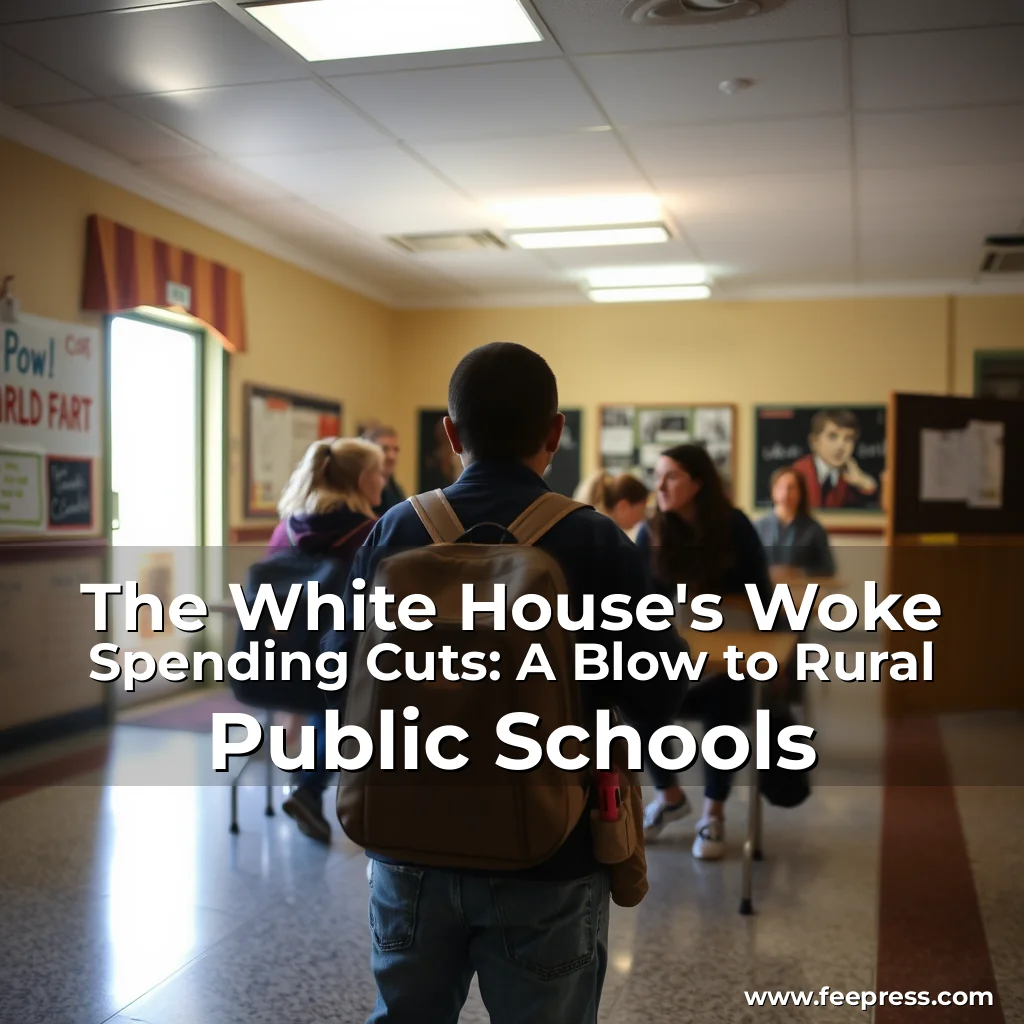
The Fate of Rural Public Schools
The White House’s sudden and sweeping pause on federal grants and funding has sent shockwaves through rural public schools, leaving administrators scrambling to address the sudden loss of funding. The pause, which included funding for programs such as the Farm to School Program, has left many rural school districts in the dark, unsure of what the future holds.
Funding Challenges in Rural Schools
Rural school districts are facing numerous funding challenges, including the phase-out of COVID-19 emergency funds and the loss of $200 million in annual federal funding due to Congress’s failure to reauthorize the Secure Rural Schools Act. Some states are also facing underperforming returns on their Public Employees Retirement System, which will require school districts to make higher payments to the system.
Shifts in Federal Education Policy
Beyond these immediate funding challenges, even more drastic shifts in federal education policy are unfolding. The president has signed an executive order to facilitate the eventual closure of the Department of Education, which could have far-reaching consequences for rural schools. Congressional action is required to legally close the department or relocate key programs like Title I funding for low-income students or IDEA funding for special education to other departments.
The Human Impact
The human impact of these funding challenges and policy shifts cannot be overstated. For many rural school administrators, the uncertainty and unpredictability of the situation are taking a toll on their mental and emotional well-being. Rural school leaders are working tirelessly to balance next year’s budget, often putting in 12- to 16-hour days to create contingency budgets and fill out federal grant paperwork.
Examples from the Field
* Trinity Alps Unified School District in rural northern California: Superintendent Jamie Green is working to create a contingency budget after the district is at risk of losing $3.5 million in SRS funding. He and other rural superintendents are putting in long hours to address the funding challenges. * Roseburg, Oregon: Superintendent Jared Cordon is working to balance the district’s budget, which relies heavily on federal funding. He is urging his community to support the district’s efforts to secure additional funding.
The Need for Support
The need for adequate and reliable support from state and federal governments is urgent, but rural school administrators are taking matters into their own hands. They are working together to find solutions and create contingency plans to address the funding challenges.
Quotes from Rural School Administrators
* “The buck stops with us. We cannot fail.” – Superintendent Jamie Green
* “We’re working as hard as we can for our students. We cannot fail.” – Superintendent Jamie Green
* “It’s just frightening because it also has a chilling effect in the building. If you’re not cut, you might be moved into a different, unfamiliar position.” – Micki Hall, former teacher and school board member
The Future of Rural Public Schools
The fate of rural public schools hangs in the balance as rural school administrators work to address the funding challenges and policy shifts. The need for support from state and federal governments is clear, but it remains to be seen whether that support will be forthcoming. One thing is certain: rural school administrators will continue to work tirelessly to ensure the success of their students and communities. The buck stops with them, and they cannot fail.
Some key points to consider:
- Rural school districts are facing numerous funding challenges, including the phase-out of COVID-19 emergency funds and the loss of $200 million in annual federal funding due to Congress’s failure to reauthorize the Secure Rural Schools Act.
- The president has signed an executive order to facilitate the eventual closure of the Department of Education, which could have far-reaching consequences for rural schools.
- Rural school administrators are working tirelessly to balance next year’s budget, often putting in 12- to 16-hour days to create contingency budgets and fill out federal grant paperwork.
The following list highlights some of the funding sources that rural school districts rely on:
- Federal grants and funding
- State funding
- Local funding
Here is a table summarizing the impact of the funding challenges on rural school districts:
| Funding Source | Impact |
|---|---|
| Federal Grants and Funding | Loss of funding for programs such as the Farm to School Program |
| State Funding | Uncertainty and unpredictability of funding |
| Local Funding | Uncertainty and unpredictability of funding |
The following quote highlights the need for support from state and federal governments:
“The buck stops with us.