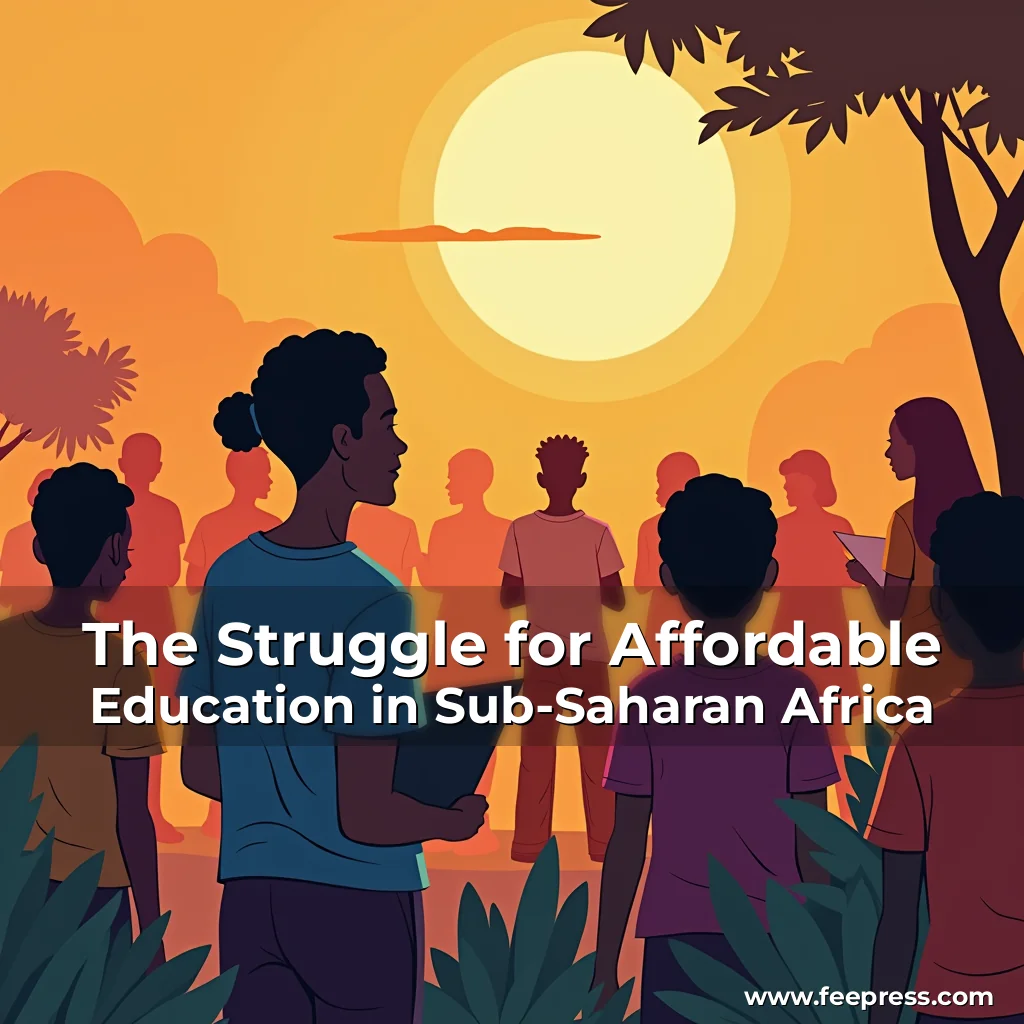
The Catholic Church’s legacy of providing affordable education in sub-Saharan Africa is under pressure due to rising tuition fees and privatization efforts. Parents are being forced to drop out of school due to financial constraints, leaving many to criticize the mission-driven Catholic Church for not doing enough to ease the financial pressure families face.
Legacy of Catholic Education Across Africa
- The Catholic Church is the region’s largest nongovernmental investor in education.
- Catholic schools have long been a pillar of affordable but high-quality education, especially for poor families.
- The appeal of Catholic education remains strong even with competition from other nongovernmental investors.
Catholic schools are cherished by families of all means for their values, discipline, and academic success. However, a growing trend toward privatization is sparking concern that the Catholic Church may price out the people who need uplifting.
Tuition Fees and Privatization
| Tuition Fees at Catholic Schools in Kampala | Tuition Fees at Uganda Martyrs’ Secondary School Namugongo | Tuition Fees at St. Kizito Secondary School |
|---|---|---|
| $300 | $600 | $300 |
One of the most expensive private schools in Kampala, Uganda Martyrs’ Secondary School Namugongo, maintains a policy of “zero balance” when a child reports to school at the beginning of a three-month term. This means students must be fully paid by the time they report to school.
Parental Pressure and School Fees
- Parents are being forced to drop out of school due to financial constraints.
- Many students report later in the term because they cannot raise school fees in time.
- Students are being prohibited from packing snacks and are encouraged to buy what they need from school-owned canteens.
“You can go there and see the brother and negotiate,” said Daniel Birungi, an electrical engineer in Kampala whose son enrolled this year at St. Mary’s College Kisubi. “I am planning to go there and see him and ask for that consideration.”
The Effects of a Private Education System
- The World Bank reported that 54% of adults in sub-Saharan Africa rank the issue of paying school fees higher than medical bills and other expenses.
- Schools run by the Catholic Church are not usually registered as profit-making entities, but those who run those schools say they face the same maintenance costs as others in the field.
- The Catholic Church urges parents to send their children to schools they can afford.
“As the Catholic Church, also we are competing with those who are in the private sector,” said Ronald Reagan Okello, a priest who oversees education at the Catholic Secretariat in Kampala. “Now, as you are competing, the other ones are setting the bar high. They are giving you good services. But now putting the standard to that level, we are forced to raise the school fees to match the demands of the people who can afford.”
Privatization and Its Impact
- Privatization efforts are sparking debate in Zimbabwe, which for years has been in economic decline.
- Authorities say privatizing these schools is necessary to maintain standards, but critics warn Catholic leaders not to turn their backs on poor people.
- “Schools have now turned into businesses,” said Martin Chaburumunda, president of the Zimbabwe Rural Teachers’ Union.
“How do we continue to guarantee education for the poor?” asked Peter Muzawazi, a prominent educator in Zimbabwe. “The church needs to be actively engaged in this issue.”
Investing in New Schools
- Muzawazi suggests that the church should invest in building new schools if it’s useful to experiment with different funding models.
- “The bright people who advance the cause of countries are not the rich ones,” said Muzawazi.
- “We want every church and every nation to tap the potential of every person, regardless of economic status.”
“Schools have now turned into businesses,” said Martin Chaburumunda, president of the Zimbabwe Rural Teachers’ Union. “Churches now appear only hungry for money as opposed to educating the communities they operate in.”
Conclusion
The struggle for affordable education in sub-Saharan Africa is a complex issue that requires the attention of the Catholic Church and other stakeholders. The church’s legacy of providing affordable education is under pressure due to rising tuition fees and privatization efforts. Parents are being forced to drop out of school due to financial constraints, and the effects of a private education system are being felt across the region.
It is essential that the Catholic Church and other stakeholders take a proactive approach to addressing this issue. This can include implementing measures to streamline fees, providing scholarships to exceptional students, and investing in building new schools if it’s useful to experiment with different funding models.
Ultimately, the goal should be to provide every person, regardless of economic status, with access to quality education. The Catholic Church has a critical role to play in achieving this goal.
“We want every church and every nation to tap the potential of every person, regardless of economic status.” – Peter Muzawazi, a prominent educator in Zimbabwe.
Copyright 2025 The Associated Press. All rights reserved.

news is a contributor at FeePress. We are committed to providing well-researched, accurate, and valuable content to our readers.