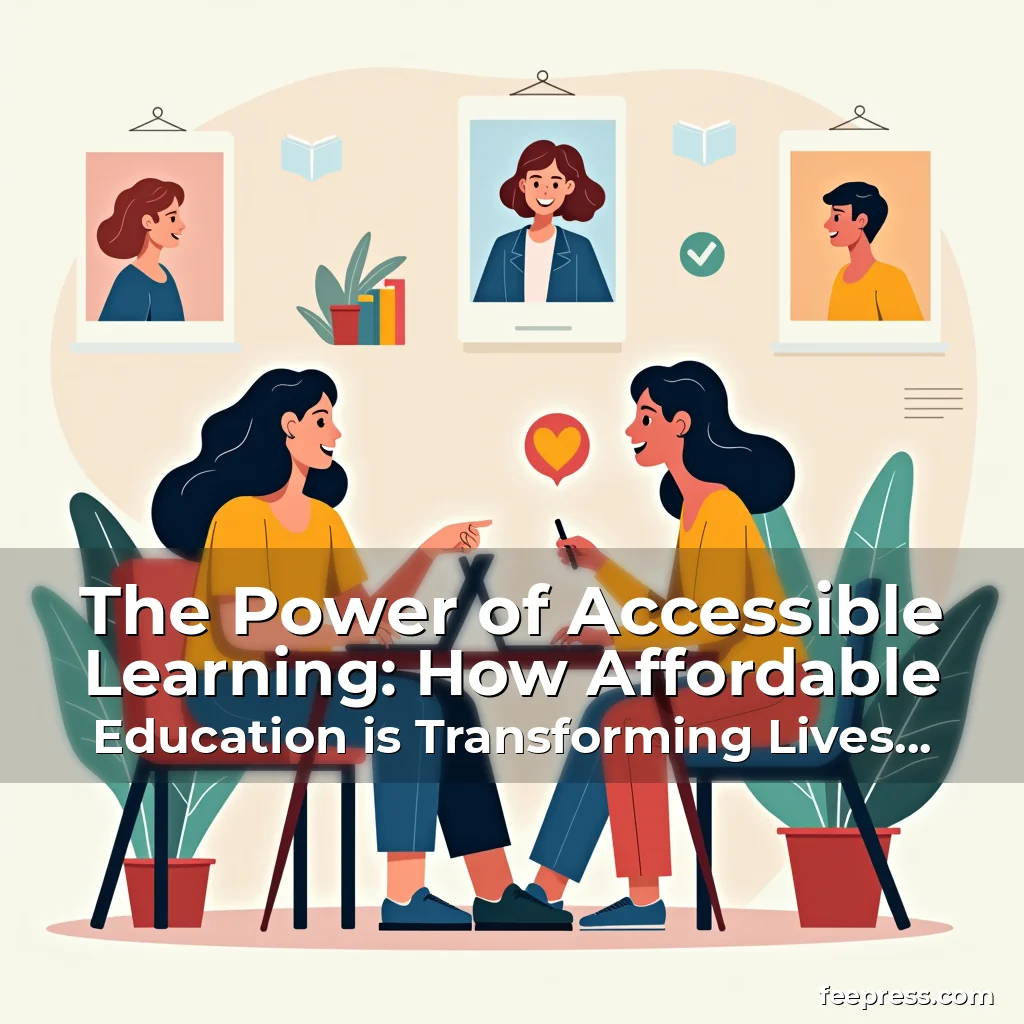
The Power of Accessible Learning: How Affordable Education is Transforming Lives Worldwide
Affordable education has emerged as a cornerstone of modern society, reshaping opportunities for individuals across diverse backgrounds. From rural villages to bustling urban centers, access to quality learning at reasonable costs is now recognized as essential for personal growth and national development.
This transformation is driven by innovative approaches that balance educational excellence with financial sustainability. As we explore these developments, we uncover how accessible learning can break down barriers and empower generations through knowledge.
Redefining Educational Equity Through Cost-Effective Models
Educational equity begins when institutions prioritize affordability without compromising academic standards. This shift challenges traditional perceptions that high-quality education necessarily requires exorbitant fees.
Schools and universities worldwide are rethinking their funding models to include subsidized programs, income-based tuition structures, and scholarship initiatives tailored for underrepresented communities.
- Income-Based Tuition: Institutions assess students’ financial capacity to determine appropriate fee levels, ensuring education remains within reach for those with limited resources.
- Bundled Services Model: Combining academic instruction with housing, meals, and health services creates cost-effective packages that reduce overall expenses for students.
Innovative Technologies Reshaping Affordability Landscapes
Digital platforms have revolutionized access to education while significantly reducing operational costs for providers. Online courses, virtual classrooms, and AI-driven tutoring systems offer scalable solutions that maintain educational quality.
Open Educational Resources (OER) represent another breakthrough, providing free digital textbooks, course materials, and multimedia content that replace costly proprietary materials.
These technological advancements enable educators to deliver personalized experiences without the overhead associated with physical infrastructure.
Moreover, mobile learning applications allow learners from remote areas to participate in global classroom discussions and access expert-led tutorials anytime, anywhere.
Government Policies Driving Educational Accessibility
Nations around the world are implementing policies aimed at making higher education financially viable for all citizens. These measures often involve direct subsidies, loan forgiveness programs, and tax incentives for educational investments.
Countries like Germany and Norway pioneered tuition-free university systems, demonstrating that high-quality education need not come with steep price tags.
Government partnerships with private sector organizations further expand accessibility through sponsored scholarships and internship programs tied to academic curricula.
Such collaborations ensure graduates gain practical experience while minimizing student debt burdens typically associated with post-secondary education.
Community-Led Initiatives Bridging the Gap
Grassroots movements play a crucial role in expanding educational access where institutional frameworks may fall short. Local leaders, teachers, and volunteers develop creative solutions tailored to specific regional needs.
Community learning centers provide after-school support, vocational training, and mentorship programs that complement formal education systems effectively.
Mobile libraries equipped with tablets and internet connectivity bring digital literacy skills to underserved populations who lack consistent access to technology.
These local efforts create sustainable ecosystems that nurture lifelong learning habits among participants of all ages.
The Role of Corporate Social Responsibility in Education
Businesses increasingly recognize that investing in education yields long-term societal benefits aligned with corporate objectives. Many companies establish foundations dedicated to supporting STEM education and workforce development programs.
Corporate-sponsored scholarship programs target underprivileged youth, offering full-tuition coverage along with career guidance and networking opportunities.
Companies also partner with schools to integrate industry-specific curriculum elements, preparing students for future employment prospects before they even graduate.
This alignment between business interests and educational goals fosters mutually beneficial relationships that enhance both employee recruitment pipelines and community engagement strategies.
Global Success Stories Demonstrating Feasibility
Several countries have successfully implemented affordable education models that serve as blueprints for others seeking similar reforms. South Korea’s investment in public schooling created an educated populace instrumental in its economic rise.
India’s National Programme on Technology Enhanced Learning offers free online degree programs that have enrolled over two million students since its inception.
Costa Rica’s emphasis on universal primary education contributed to its status as one of Latin America’s most developed nations despite modest natural resource wealth.
These examples prove that strategic government commitments combined with innovative delivery methods yield remarkable outcomes for entire societies.
Overcoming Persistent Challenges in Implementation
While progress continues globally, several obstacles remain in achieving widespread educational affordability. Infrastructure limitations hinder digital learning adoption in remote regions lacking reliable internet connections.
Misconceptions about the value of lower-cost education persist among some segments of society, creating stigma that discourages potential beneficiaries from pursuing available options.
Ensuring equitable distribution of resources presents ongoing difficulties, particularly in politically unstable environments where funding allocations become contentious issues.
Addressing these challenges requires coordinated efforts involving governments, educators, technologists, and community stakeholders working toward common goals.
Future Trends Shaping Affordable Education
Emerging technologies promise to further transform the landscape of accessible learning. Virtual reality simulations could soon immerse students in historical events or scientific phenomena at unprecedented levels of interactivity.
Artificial intelligence assistants might personalize learning paths based on individual strengths, weaknesses, and preferences, optimizing educational outcomes efficiently.
The growing importance of microcredentials suggests a future where modular learning units replace traditional degrees as primary indicators of professional competence.
As these innovations evolve, maintaining ethical considerations regarding data privacy and algorithmic bias will be critical to preserving educational integrity.
Building Sustainable Systems for Lasting Impact
Create lasting change requires building robust infrastructures capable of adapting to evolving demands. Investment in teacher training ensures educators can leverage new tools effectively while maintaining pedagogical rigor.
Continuous evaluation mechanisms help identify programmatic gaps and measure impact accurately against established benchmarks.
Fostering international collaboration enables sharing best practices across borders, accelerating successful implementations wherever they occur.
By prioritizing sustainability alongside immediate accessibility gains, we lay foundations for enduring educational transformations benefiting current and future generations alike.
Conclusion
Affordable education represents more than just reduced costs – it embodies a commitment to equal opportunity and human potential realization. When properly structured, low-cost learning systems can deliver exceptional results comparable to their more expensive counterparts.
To achieve true educational equity, stakeholders must continue innovating, collaborating, and advocating for systemic changes that make quality education universally accessible. Every step forward brings us closer to a world where talent determines success rather than financial privilege.