The Hidden Lifeline: Unpacking Financial Aid Options for Students and Families
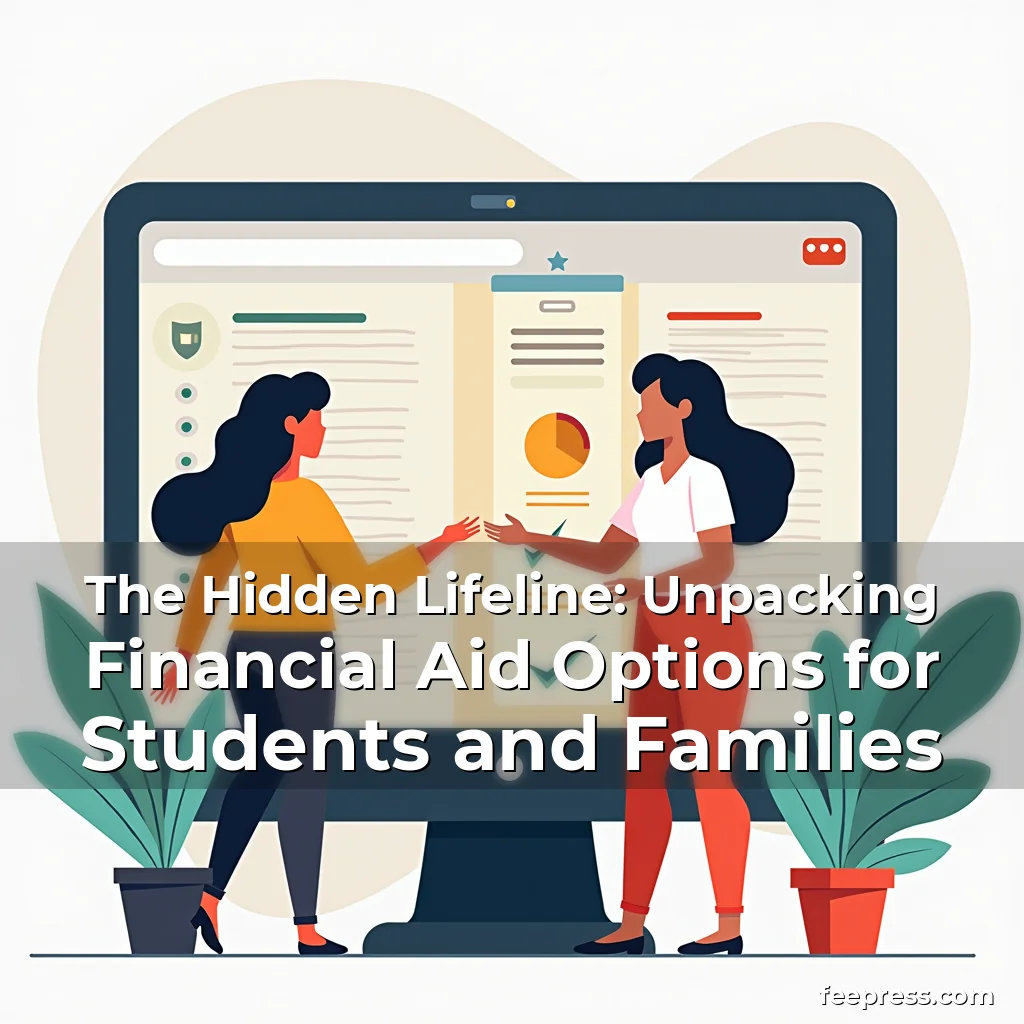
In an era where higher education costs continue to rise at alarming rates, understanding the intricate web of financial aid options has become essential for students and their families. From federal grants to private scholarships, navigating these resources can mean the difference between pursuing academic dreams and settling for less.
This guide will illuminate the often-overlooked pathways that make quality education accessible without compromising personal finances. Whether you’re a first-time applicant or seeking additional support, uncovering the full spectrum of financial assistance is crucial for making informed decisions about your educational journey.
Demystifying Financial Aid Terminology
Federal student aid programs are among the most reliable sources of funding available to eligible students. These programs include grants, loans, and work-study opportunities designed to help cover tuition, books, and other related expenses.
Grants typically do not need to be repaid, making them highly desirable for those seeking affordable college options. Federal Pell Grants, for example, target low-income undergraduate students who demonstrate significant financial need.
Loans differ significantly from grants because they require repayment after graduation. However, many federal loan programs offer subsidized interest rates and flexible repayment plans tailored to graduates’ income levels.
Work-study programs provide part-time employment opportunities on campus or through approved off-campus employers. This option allows students to earn money while gaining professional experience relevant to their field of study.
- Need-based aid: Awards based primarily on demonstrated financial hardship rather than academic performance
- Merit-based aid: Recognizes exceptional achievements in academics, athletics, arts, or leadership roles
- Campus-based aid: Offered directly by colleges and universities as part of institutional financial assistance packages
Differentiating between these types helps applicants strategically apply for awards that align best with their individual circumstances and goals.
Exploring Federal Student Loan Programs
The U.S. Department of Education offers several federal loan programs specifically designed to assist students in financing their postsecondary education. Understanding each program’s eligibility criteria and benefits ensures effective use of available funds.
Direct Subsidized Loans are reserved exclusively for undergraduates demonstrating financial need. One notable feature is that the government covers interest charges during periods when the borrower is enrolled in school full-time.
Direct Unsubsidized Loans are available regardless of financial status but accrue interest from the moment disbursement occurs. Borrowers have flexibility regarding repayment timelines and may defer payments under certain conditions.
PLUS Loans cater to graduate students and parents of dependent undergraduates looking to bridge financial gaps left by existing forms of aid. These loans carry higher interest rates compared to standard federal loan products.
Private lenders also play a role in providing educational loans although they generally come with stricter approval requirements and potentially less favorable terms than federally backed alternatives.
Navigating College Scholarship Opportunities
Scholarships represent another critical component of financial aid portfolios, offering free money that does not need to be repaid upon completion of studies. They vary widely in scope, value, and application processes depending on numerous factors such as academic excellence or extracurricular involvement.
Merit scholarships reward outstanding academic records, standardized test scores, or special talents across various disciplines including music, sports, science fairs, etc. Many institutions allocate substantial amounts annually towards recognizing high achievers within their communities.
Need-based scholarships prioritize candidates exhibiting demonstrable financial constraints over traditional metrics used in merit-based award determinations. These scholarships aim to ensure equal access to higher learning despite socioeconomic disparities.
Specialty scholarships exist for individuals belonging to particular demographic groups or possessing unique skill sets. For instance, there might be dedicated funding streams supporting women in STEM fields or veterans transitioning back into civilian life through further education.
Applicants should maintain thorough documentation showcasing accomplishments relevant to scholarship applications since competition remains fierce due to limited availability relative to demand.
Understanding Institutional Financial Assistance Packages
Colleges and universities frequently develop customized financial aid strategies aimed at attracting prospective enrollees while maintaining affordability standards necessary for long-term success both academically and financially.
These institutional packages often combine grants, scholarships, work-study positions, and sometimes even tuition waivers offered selectively to promising candidates who meet specific criteria set forth by respective institutions.
Institutional aid differs from federal subsidies because its distribution depends heavily on internal policies established independently by each university rather than nationwide regulations governing national-level initiatives.
Students applying early decision or early action may receive enhanced consideration for institutional funding opportunities due to prioritization efforts made by admissions committees aiming to secure top talent ahead of regular admission cycles.
It is advisable to inquire directly with financial aid offices about available local scholarships which could yield considerable savings over time especially considering cumulative costs associated with four-year degree programs.
Leveraging State-Specific Support Systems
Beyond federal provisions lie state-sponsored financial aid mechanisms uniquely crafted to serve residents pursuing degrees within designated geographical regions. These programs often reflect broader governmental priorities concerning workforce development needs prevalent locally.
State grant programs usually have distinct eligibility thresholds determined by state governments taking into account median household incomes prevailing within given jurisdictions alongside other socio-economic indicators pertinent only locally applicable contexts.
Some states implement matching fund arrangements wherein contributions from private entities complement public investments toward achieving targeted enrollment targets aligned with regional economic growth objectives identified via strategic planning exercises conducted periodically.
Residents benefitting from state-level aid typically gain priority consideration for local internships or job placements following graduation thereby strengthening ties between academic pursuits undertaken earlier versus career prospects emerging later during transition phases occurring after completing formal training sessions.
To maximize potential gains arising out of such localized offerings, applicants must thoroughly research state-specific requirements ensuring compliance with procedural norms required prior initiating formal requests seeking participation rights entailed therein.
Maximizing Work-Study Program Benefits
Work-study programs present dual advantages enabling participants to offset educational expenditures simultaneously acquiring practical skills transferable beyond classroom environments facilitating smoother transitions into professional domains subsequent completion of coursework sequences.
Eligibility assessments consider financial need parameters alongside academic standing benchmarks ensuring equitable allocation of limited resource pools allocated annually according to budgetary constraints faced by participating organizations administering these schemes.
Candidates selected successfully engage in part-time appointments either internally within host campuses operating facilities requiring human capital inputs or externally affiliated partners whose missions resonate closely enough with core competencies being cultivated concurrently elsewhere.
Participants regularly receive stipends remunerated biweekly intervals coinciding with typical payroll schedules followed industry-wide enhancing predictability regarding monthly cash flows manageable effectively amidst concurrent responsibilities incurred fulfilling curricular obligations imposed universally irrespective of chosen specialization paths pursued actively.
Engagement within structured frameworks promoting experiential learning fosters holistic development trajectories beneficial ultimately leading towards fulfillment aspirations previously deemed unattainable absent tangible exposure opportunities otherwise inaccessible without deliberate pursuit initiated proactively beforehand.
Evaluating Private Educational Loan Options
While federal loans remain preferred choices owing largely attributable superior consumer protections embedded inherently within legislative structures framing them distinctly apart from commercial instruments governed purely by market forces influencing pricing models employed extensively nowadays.
However, circumstances necessitating supplemental funding occasionally compel recourse towards alternative financing avenues albeit accompanied inevitably heightened scrutiny focused intensively upon creditworthiness profiles scrutinized rigorously before approving proposals submitted earnestly hoping securing approvals granted conditionally contingent upon meeting stringent prerequisites outlined explicitly upfront transparently.
Prospective borrowers ought carefully compare interest rate spreads differentiating fixed-rate agreements locking in predetermined figures versus variable-rate counterparts susceptible fluctuations tied loosely macroeconomic trends impacting broadly entire financial ecosystems globally interconnected intricately complex networks spanning continents seamlessly.
Moreover, evaluating repayment terms meticulously becomes imperative particularly focusing attention duration periods prescribed mandatorily enforced uniformly across diverse scenarios encountered commonly amongst graduating cohorts exiting academic institutions having completed requisite qualifications prerequisite obtaining certifications validating expertise acquired diligently over extended durations spent immersed deeply studying subjects explored exhaustively comprehensively.
Credit history evaluations performed consistently throughout lifecycle determine accessibility privileges accorded subsequently whenever future borrowing attempts occur necessitating reassessment current standings periodically recommended routinely irrespective ongoing stability perceived objectively assessed subjectively too based contextual variables affecting judgments rendered accurately reliably.
Planning Ahead for Future Academic Costs
Predictive modeling techniques applied systematically enable forecasting probable expenditure patterns expected materialize forthcoming years allowing proactive measures implemented preemptively mitigating risks stemming uncertainties inherent educational journeys embarked upon willingly knowingly.
Estimating living expenses constitutes vital element calculation overall budgets constructed meticulously ensuring sufficient liquidity maintained continuously throughout tenure enrolled institutions selected deliberately judiciously weighing pros cons associated alternatives considered exhaustively thoroughly.
Cost-of-living indices fluctuate regionally prompting necessity adjusting projections accordingly accounting variations residing urban centers contrasting rural locales experiencing divergent inflationary pressures exerted differently depending locality specifics influencing purchasing power dynamics fundamentally altering comparative values assigned commodities services consumed recurrently habitually.
Additional considerations encompass travel costs incurred attending conferences workshops symposia seminars enriching experiences augmenting knowledge bases expanding horizons broadening perspectives contributing positively reinforcing foundations laid groundwork initially.
By incorporating these elements into financial planning, students can create realistic roadmaps guiding them through the complexities of managing educational expenses while staying focused on their ultimate goals.
Conclusion
Financial aid serves as a cornerstone supporting countless students in realizing their educational ambitions despite facing formidable obstacles posed by escalating tuition fees coupled with diminishing family resources traditionally relied upon historically.
With careful navigation of available options ranging from federal grants to specialized scholarships, anyone committed to advancing personally professionally stands poised succeed triumphantly overcoming challenges confronted along winding path traversed relentlessly persistently until destinations reached achieved fulfilled completely absolutely fully satisfied entirely.

news is a contributor at FeePress. We are committed to providing well-researched, accurate, and valuable content to our readers.