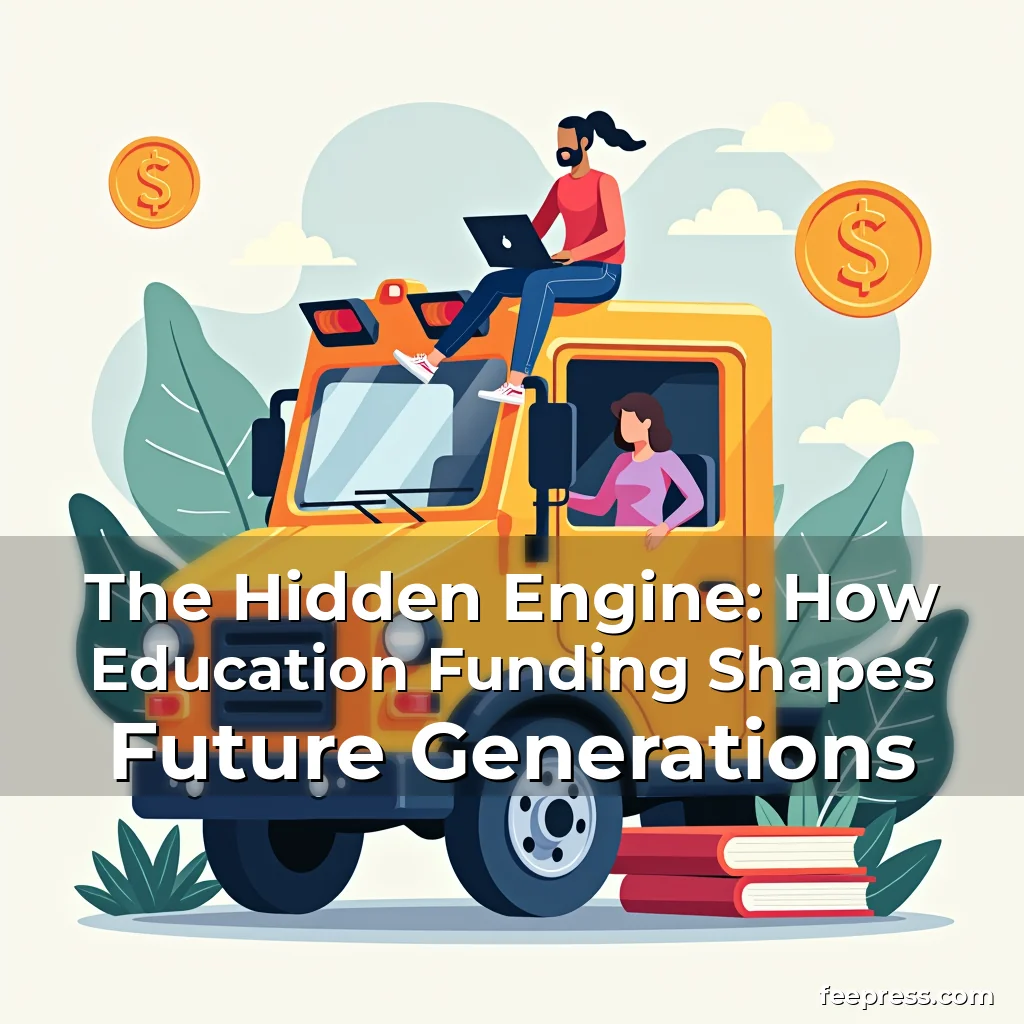
The Hidden Engine: How Education Funding Shapes Future Generations
In the intricate machinery of societal progress, education funding acts as both the spark plug and the fuel line—an often-overlooked force that determines whether tomorrow’s leaders will rise from the ashes of today’s challenges. From crumbling school buildings to innovative STEM labs, the amount and distribution of educational resources define not only what students learn but also who gets to learn.
This exploration delves deep into the complex world of education finance, uncovering how public investments shape academic outcomes, influence social mobility, and ultimately determine the trajectory of entire communities. As we navigate through this critical subject, we’ll reveal why every dollar allocated to schools echoes far beyond classroom walls.
The Invisible Hand: Understanding Where Education Dollars Come From
Funding for K-12 education comes from a tangled web of sources—state legislatures, local property taxes, federal grants, and even private donations. This multi-layered system creates a patchwork of financial support that varies dramatically across regions.
Taxpayer-funded programs form the backbone of most school systems, yet their effectiveness depends heavily on local economic conditions. In affluent districts, robust property tax bases allow for modern facilities and enriched curricula, while underfunded schools struggle with outdated textbooks and overcrowded classrooms.
Federal initiatives provide crucial supplemental support, especially for disadvantaged populations. Programs like Title I funding target schools with high concentrations of low-income students, aiming to level the playing field through additional resources and specialized staff.
Private contributions have grown increasingly significant in recent years, particularly in charter school networks and university endowments. These funds often come with strings attached, shaping pedagogical approaches and institutional priorities.
The Equity Paradox: Why Funding Disparities Matter More Than You Think
School funding disparities create invisible barriers that affect student performance long before they step inside a classroom. Research consistently shows that children from wealthier backgrounds start life with advantages that compound over time.
A 2022 study by the National Center for Education Statistics revealed that schools serving predominantly low-income students receive approximately $2,000 less per pupil than those in higher-income areas. While this gap may seem modest, its cumulative impact is profound.
These discrepancies manifest in tangible ways—from larger class sizes to fewer extracurricular opportunities. Students at well-funded schools benefit from advanced placement courses, college counseling services, and state-of-the-art laboratories that are luxuries elsewhere.
The consequences extend beyond academic achievement. Under-resourced schools face higher dropout rates and lower college enrollment figures, perpetuating cycles of poverty and limiting future earning potential for generations.
The Ripple Effect: Long-Term Implications of Unequal Funding
Economists warn that persistent funding gaps contribute to widening income inequality. A Brookings Institution analysis found that students attending well-funded schools earn up to 15% more annually compared to peers from underfunded institutions.
Moreover, these disparities reinforce systemic inequities in healthcare access and criminal justice outcomes. Children from poorly funded schools are more likely to experience health issues related to environmental factors and lack access to preventive care options.
Communities with chronically underfunded schools suffer economically in the long run. Lower workforce quality translates to reduced innovation capacity, weaker business environments, and diminished overall prosperity.
This cycle of disadvantage becomes self-perpetuating without intervention. When entire neighborhoods see limited investment in education, the resulting human capital deficiencies hinder regional development for decades.
Reimagining Finance Models: Innovative Approaches to School Funding
Pioneering states like California and New Jersey have implemented revenue-limitation formulas designed to equalize funding between districts. These models cap local contributions while guaranteeing minimum state support regardless of geographic location.
Some jurisdictions experiment with weighted student funding formulas that allocate more money to students facing particular challenges—such as those living in poverty, learning English, or requiring special education services.
Technology has opened new avenues for funding equity. Online learning platforms enable resource-sharing among schools, allowing underprivileged institutions access to digital libraries, virtual labs, and remote mentorship programs previously unavailable.
Crowdfunding initiatives have gained traction as supplementary tools, though experts caution against relying solely on voluntary contributions for essential educational needs.
Global Perspectives: Lessons from International Education Systems
Norway provides a compelling case study in equitable education financing. The country allocates roughly 6% of GDP to education, ensuring universal access to high-quality schooling regardless of socioeconomic background.
Germany’s dual-track system combines vocational training with academic pathways, supported by government subsidies that reduce tuition costs for students pursuing technical careers.
South Korea’s success story reveals how strategic investment can transform educational landscapes. Despite relatively modest national budgets, targeted spending on teacher salaries and infrastructure upgrades propelled the nation to global competitiveness.
Comparative analyses show that countries prioritizing early childhood education tend to achieve better long-term outcomes. Finland’s emphasis on preschool programs correlates strongly with improved literacy rates and reduced achievement gaps later in life.
Teacher Compensation and Retention: The Human Side of Education Funding
Salaries represent one of the largest single expenses in school budgets, yet many districts struggle to attract and retain qualified educators. Competitive pay structures become vital in preventing brain drain from teaching professions.
Research indicates that teachers in underpaid positions experience significantly higher turnover rates. A 2023 survey by the American Federation of Teachers showed that nearly 40% of educators considered leaving the profession due to inadequate compensation.
Investment in professional development enhances teacher efficacy and job satisfaction. Schools allocating budget shares toward ongoing training report stronger student engagement and improved test scores.
Student loan forgiveness programs offer promising solutions. Some states now offer debt relief incentives for teachers working in underserved areas, creating win-win scenarios for both educators and communities.
The Digital Divide: Addressing Technology Gaps in Modern Classrooms
Digital literacy has become non-negotiable in contemporary education, yet technology access remains unevenly distributed. Schools in rural or impoverished areas frequently lag behind in device availability and internet connectivity.
The pandemic highlighted these disparities when sudden transitions to online learning exposed glaring infrastructural shortcomings. Many students lacked basic computing equipment or reliable broadband access during remote instruction periods.
Public-private partnerships have emerged as viable solutions. Tech companies collaborating with school districts help bridge the gap through donated devices and subsidized internet plans for qualifying families.
Moving forward requires sustained investment in digital infrastructure. Educational policymakers must prioritize updating hardware, software, and network capabilities to ensure equitable learning experiences for all students.
Beyond the Budget: Non-Monetary Resources That Shape Learning Environments
While financial resources play a central role, intangible assets profoundly influence educational outcomes. Qualified faculty, supportive leadership, and engaged parents collectively create nurturing ecosystems for student growth.
Effective principal leadership correlates with improved school performance metrics. Administrators who foster collaborative cultures and implement data-driven strategies enhance instructional quality and student motivation.
Parental involvement emerges as a powerful multiplier effect. Schools with strong family-school partnerships witness increased graduation rates and greater postsecondary readiness among students.
Community organizations contribute meaningfully through after-school programs, tutoring services, and mentorship initiatives that supplement formal curriculum offerings.
Measuring Impact: Evaluating the ROI of Education Investments
Assessing the value of education funding requires looking beyond immediate cost-benefit ratios. Longitudinal studies track graduates’ career trajectories and societal contributions to gauge true returns on investment.
Economic analyses demonstrate that every dollar invested in early childhood education yields approximately $7-$10 in long-term savings through reduced crime rates, lower welfare expenditures, and enhanced productivity gains.
Higher education funding produces demonstrable benefits too. Graduates from well-supported universities command higher wages and contribute more substantially to national economies through entrepreneurship and research advancements.
However, measuring impact presents methodological challenges. Researchers grapple with isolating educational effects from other influencing variables such as family background and broader socioeconomic trends.
Policy Considerations: Crafting Effective Education Funding Strategies
Legislators face difficult choices when allocating education budgets. Balancing competing priorities demands careful consideration of evidence-based practices and demographic realities.
Transparent reporting mechanisms build trust and accountability within education systems. Public dashboards displaying expenditure breakdowns empower stakeholders to monitor resource allocation effectively.
Data-informed decision-making ensures that funding reaches where it’s needed most. Analytics tools help identify underperforming schools and redirect resources strategically to maximize impact.
Engaging diverse voices in policymaking processes strengthens legitimacy and improves implementation success rates. Including educators, parents, and students fosters inclusive governance frameworks.
Conclusion
Education funding serves as both a mirror and a mold—one reflecting current societal values while simultaneously shaping the futures of countless individuals. It’s a dynamic process influenced by political decisions, economic forces, and evolving educational philosophies.
As we’ve explored, investing wisely in education isn’t merely about numbers on spreadsheets; it’s about building foundations that sustain communities, drive innovation, and expand opportunity for all. The path forward requires visionary policies, courageous reforms, and unwavering commitment to the belief that every child deserves a chance to thrive.

news is a contributor at FeePress. We are committed to providing well-researched, accurate, and valuable content to our readers.