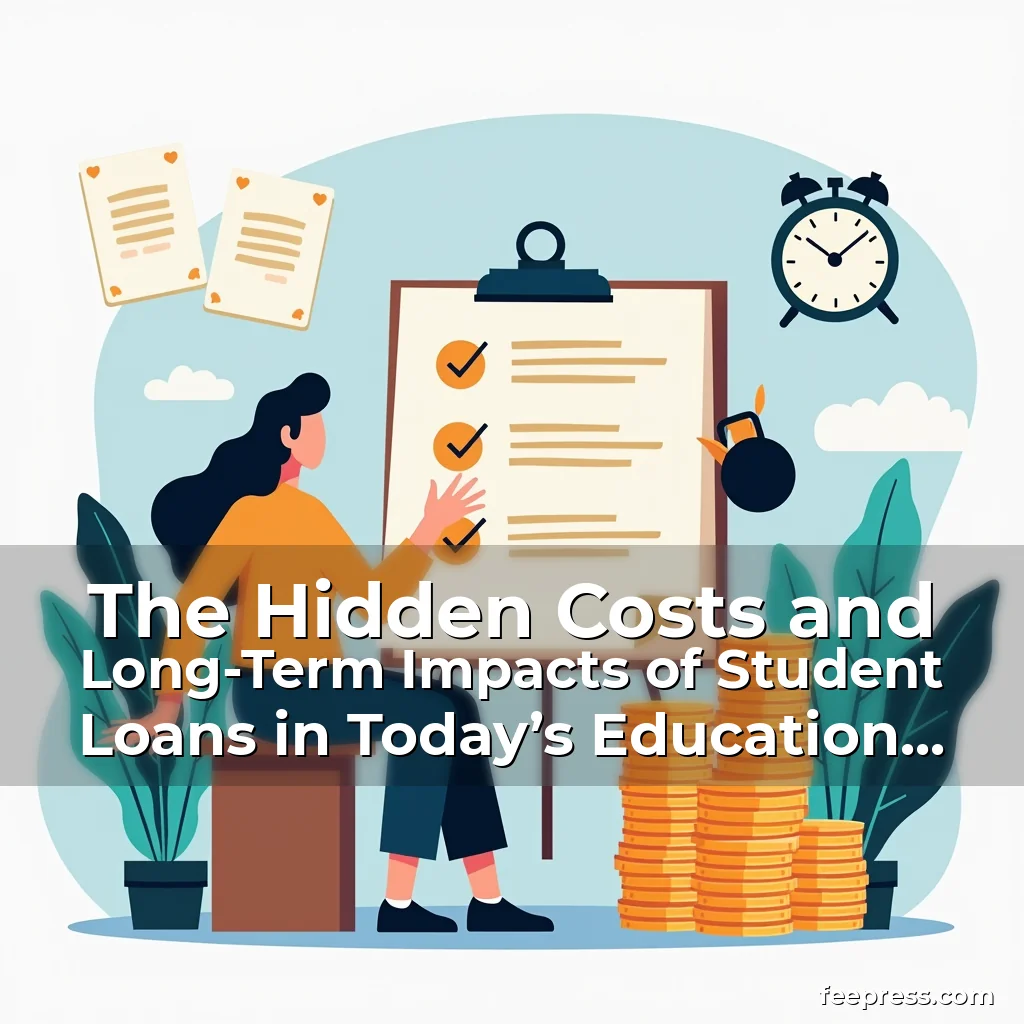
The Hidden Costs and Long-Term Impacts of Student Loans in Today’s Education Landscape
In an era where higher education is often seen as a gateway to success, student loans have become both a lifeline and a burden for millions across the globe. From undergraduate studies to postgraduate degrees, the financial implications of borrowing can shape not only academic pursuits but also future career choices and personal finances.
The complexity surrounding student loans extends beyond mere repayment schedules; it involves understanding interest rates, loan forgiveness programs, and the long-term consequences of debt accumulation. As students navigate their educational journeys, they must weigh these factors carefully to avoid falling into a cycle that could affect them well into retirement.
Understanding the Types of Student Loans Available
Student loans come in various forms, each tailored to meet different needs and circumstances. Federal loans are typically subsidized by the government and offer lower interest rates compared to private alternatives. These include Direct Subsidized Loans, which do not accrue interest while the borrower is enrolled in school, and Unsubsidized Loans, which begin accruing interest from the moment funds are disbursed.
Private student loans, on the other hand, are offered by banks and credit unions. They usually require a co-signer due to the high risk associated with lending to individuals without established credit histories. Interest rates on these loans vary widely based on the lender’s policies and the borrower’s creditworthiness.
- Federal Loans: Offer fixed interest rates, flexible repayment options, and potential eligibility for loan forgiveness programs.
- Private Loans: May provide larger amounts than federal loans but lack the same protections and benefits.
It is crucial for prospective borrowers to understand the differences between these types of loans before committing to any agreement. This knowledge empowers students to make informed decisions regarding their financing strategies and future obligations.
Evaluating the Financial Burden of Student Debt
The average amount of student loan debt has risen sharply over recent years, placing increasing pressure on graduates entering the workforce. According to data from the U.S. Department of Education, the median student loan debt for bachelor’s degree recipients was approximately $30,000 in 2023, up significantly from previous decades.
This growing trend raises concerns about how effectively such debts are managed after graduation. Many new professionals find themselves struggling with monthly payments when starting salaries may not align with their expected income levels. The mismatch between earnings potential and debt obligations can lead to prolonged periods of financial stress.
Statistics on Student Loan Default Rates
Default rates among student loan borrowers remain alarmingly high despite efforts to improve financial literacy around managing debt. In particular, those who borrow heavily during their undergraduate studies face greater challenges in repaying their loans upon graduation.
Studies indicate that default rates tend to increase when borrowers take out loans at institutions known for poor graduate employment outcomes or low completion rates. Understanding these trends helps inform better decision-making processes related to choosing schools and majors.
Navigating Repayment Options Post-Graduation
Once students complete their education, they enter what many refer to as the “reality check” phase—dealing with the actual responsibilities of repaying borrowed money. Various repayment plans exist designed to accommodate diverse financial situations following graduation.
Standard repayment plans generally require fixed monthly payments over ten years, whereas extended plans allow for longer repayment terms but result in paying more total interest over time. Income-driven repayment plans adjust monthly payments based on the borrower’s discretionary income level.
- Income-Based Repayment (IBR): Caps monthly payments at a percentage of the borrower’s income, making it easier to manage for those earning less than expected.
- Paid in Full (PFF) Plans: Allow borrowers to repay their entire balance within five years through higher monthly payments.
Borrowers should explore all available repayment options thoroughly since selecting the right plan can significantly impact overall financial health in the years ahead. It might be beneficial to consult with a financial advisor or use online calculators provided by federal agencies to determine optimal payment structures.
Loan Forgiveness Programs and Their Impact
For some borrowers, especially those working in public service sectors, there are opportunities for partial or full forgiveness of student loans under specialized programs. These initiatives aim to encourage graduates to pursue careers deemed essential to society yet traditionally undervalued financially.
The Public Service Loan Forgiveness Program (PSLFP), for instance, forgives remaining balances on eligible federal student loans after ten years of qualifying payments made while employed full-time by certain nonprofit organizations or governmental entities. Such provisions offer significant relief for those committed to serving communities rather than maximizing personal gain.
- Career-Specific Forgiveness: Certain professions like teaching, nursing, and law enforcement qualify for targeted forgiveness schemes depending on location and employer type.
- Teacher Cancellation: Teachers may receive up to $17,500 in loan cancellation if they teach for five consecutive years in low-income schools designated by the government.
However, it is vital to note that these programs often involve strict criteria and documentation requirements. Borrowers must ensure they meet all conditions and maintain accurate records throughout their participation period to successfully qualify for forgiveness benefits.
The Psychological Toll of Student Loan Debt
While much attention focuses on the economic aspects of student loans, the psychological effects cannot be overlooked. The weight of outstanding debt can create anxiety, depression symptoms, and even influence life decisions such as delaying marriage or buying homes until later ages.
Research indicates that individuals carrying substantial student loan burdens report lower happiness scores compared to peers without similar financial pressures. Furthermore, mental health issues linked to chronic debt stress highlight the need for broader support systems addressing not just monetary concerns but emotional wellbeing too.
Support Systems for Managing Mental Health Issues Related to Debt
Awareness campaigns promoting open discussions about financial wellness play a critical role in mitigating negative impacts associated with student debt. Universities increasingly incorporate financial counseling services into their offerings, helping students develop healthy coping mechanisms early on.
Additionally, peer support groups focused specifically on sharing experiences related to managing student loan debt foster environments where individuals feel understood and supported. Engaging actively within such networks can alleviate feelings of isolation commonly experienced by indebted graduates.
Strategies for Minimizing Future Student Loan Obligations
To reduce reliance on excessive borrowing, aspiring students should consider alternative funding sources alongside traditional loans. Scholarships, grants, work-study programs, and part-time jobs present viable methods for covering educational expenses without accumulating heavy debt loads.
Moreover, enrolling in accredited colleges recognized for strong job placement rates increases chances of securing competitive wages post-graduation—a factor directly influencing ability to manage repayment commitments efficiently. Researching program costs versus return-on-investment ratios becomes imperative when deciding where to study.
- Scholarship Hunting: Actively seeking scholarships reduces dependency on loans and enhances overall financial stability after completing education.
- Work Study Programs: Provide structured part-time employment opportunities allowing students earn money while gaining relevant experience.
Students should also leverage resources like college financial aid offices or independent websites offering comparisons between tuition fees and industry salary expectations. Making educated choices regarding institution selection plays a pivotal role in shaping long-term fiscal security.
The Role of Government Policy in Shaping Student Loan Landscapes
Governments worldwide continuously review and reform policies governing student finance to address evolving societal needs and economic realities. Recent legislative changes reflect attempts to ease access to affordable education while ensuring sustainable management of national debt portfolios.
Initiatives aimed at expanding eligibility criteria for existing loan forgiveness programs demonstrate policy shifts towards recognizing value-added roles played by educators and healthcare workers. Additionally, measures focusing on transparency enhance consumer awareness concerning true cost-of-living scenarios faced by modern learners.
Recent Legislative Changes Affecting Students
New legislation introduced in several countries seeks to streamline application processes for deferment requests amid unforeseen hardships such as medical emergencies or unemployment spells. Simplified procedures enable quicker responses during times of crisis thereby reducing risks associated with defaulting on payments.
Furthermore, digital platforms launched by regulatory bodies facilitate easy tracking of individual loan statuses along with real-time updates regarding applicable relief measures. Such technological advancements empower users to stay proactive about maintaining good standing with creditors.
Conclusion
Student loans serve dual purposes—as tools enabling access to quality education and as potential liabilities requiring careful stewardship. Recognizing their multifaceted nature allows individuals to approach borrowing decisions strategically rather than reactively.
By staying informed about current trends impacting student financing landscapes—including emerging technologies enhancing accessibility—and leveraging available support structures comprehensively, tomorrow’s leaders will be equipped to navigate complex financial terrains confidently toward achieving lifelong goals unencumbered by undue debt pressures.